



Drop Attachments for Aerial Service: A Complete Guide
Drop attachments hold an aerial service drop at the pole, along the span, and at the building. The family covers banding, brackets, house hooks, mast fittings, cable clamps, and clips. Selection starts with the cable type, the mounting surface, and the load path, then moves to materials and installation tools. This guide maps the hardware and the checks that keep a drop secure.
A service drop is short, but it crosses several different structures. The pole is round and treated. The bracket is punched or slotted. The building may be wood, masonry, or metal. Each transition needs a fitting that matches the surface and carries the cable without crushing it.
Where drop attachments sit
The drop has two ends and a span between them. At the pole, the hardware transfers cable tension into the pole. At the building, the hardware anchors the drop and sets the entry height. Along the span, clamps and clips keep the cable from rubbing or sagging into another service.
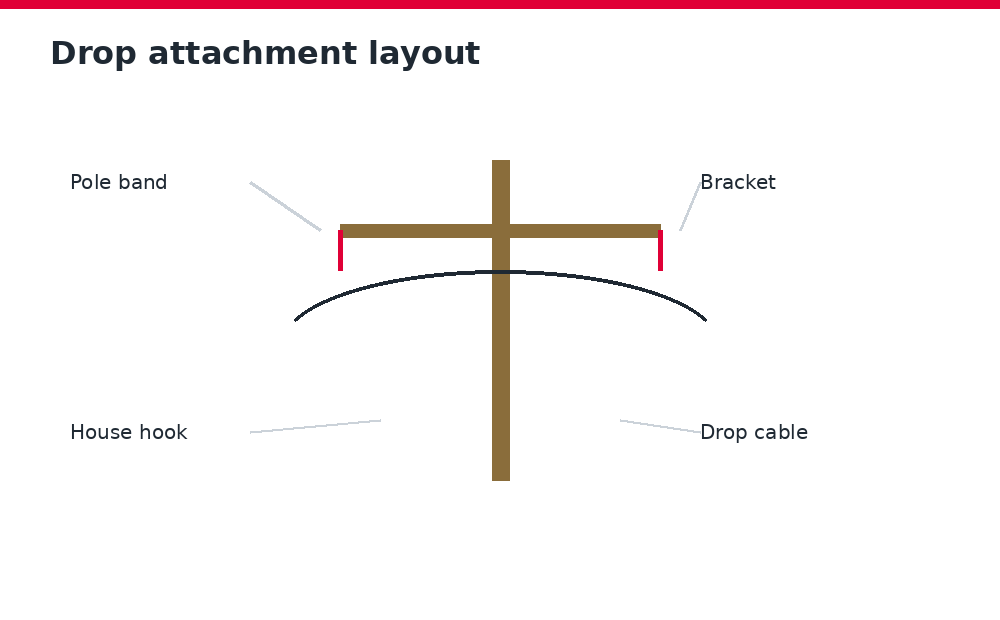
Most crews see the same sequence on every job: band the pole, bolt a bracket to the band, run the cable to the building, and terminate at a hook or mast. The details change with the cable and the structure, but the load path does not. A weak connection anywhere in that chain shows up as sag, chafe, or a pullout.
The hardware families
| Family | Where it works | What it carries | Selection check |
|---|---|---|---|
| Banding | Pole or mast | Bracket and attachment loads | Band width, buckle, and pole circumference |
| Brackets | Pole, wall, or mast | Drop cable and attached hardware | Hole pattern, standoff, and band slot |
| House hooks | Building exterior | Drop cable at the entry | Fastener type and framing |
| Mast fittings | Building or roof | Cable clear of roof and wall | Mast size and standoff |
| Cable clamps and clips | Span and building | Cable support and routing | Cable diameter and jacket |
The table groups parts by the job they do, not by catalog page. A bracket and a band usually ship as separate items, and a house hook may come with its own fastener. Confirm the assembly as a set before ordering.
Pole-side attachments
Stainless steel band wraps the pole and closes through a buckle. A banding tool pulls the band to the required tension, crimps or locks the buckle, and cuts the tail. The bracket sits under the band or bolts through it, depending on the design. A loose band lets the bracket rotate; an over-tensioned band can distort a thin-wall pole or damage the coating.
Bracket choice follows the attachment. A straight-leg bracket holds a clamp or hook close to the pole. A standoff bracket moves the cable away from the pole surface to clear an obstruction or meet a required clearance. Check the band slot width against the band, and check the hole pattern against the bolt or hook that will hang on it.
Do not substitute a hose clamp for a band on a load-bearing bracket. Hose clamps have a place on light clips and small fittings, but their band geometry and holding range differ from cut-to-length stainless banding. Confirm the attachment load with the engineer before downsizing the fastener.
Band edges matter. A sheared tail leaves a sharp point, and a burred slot can cut the band or a glove. File or cover the tail according to the banding tool instructions, and inspect the finished band before the bracket is loaded.
Building-side attachments
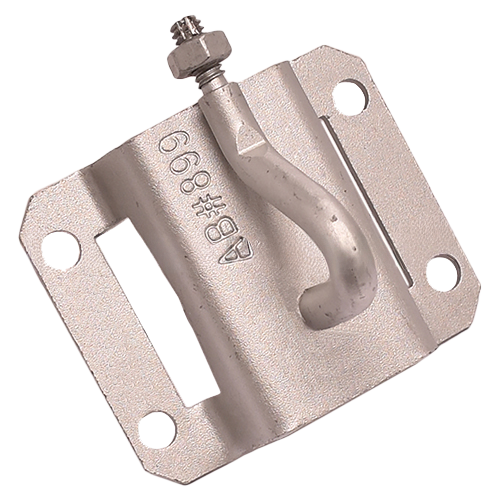
House hooks and screw eyes anchor the drop at the building. The hook holds the cable or a support wire; the screw eye provides a closed attachment point. Both depend on a secure connection to framing. A lag screw into siding or trim is not the same as a fastener into a stud or header.
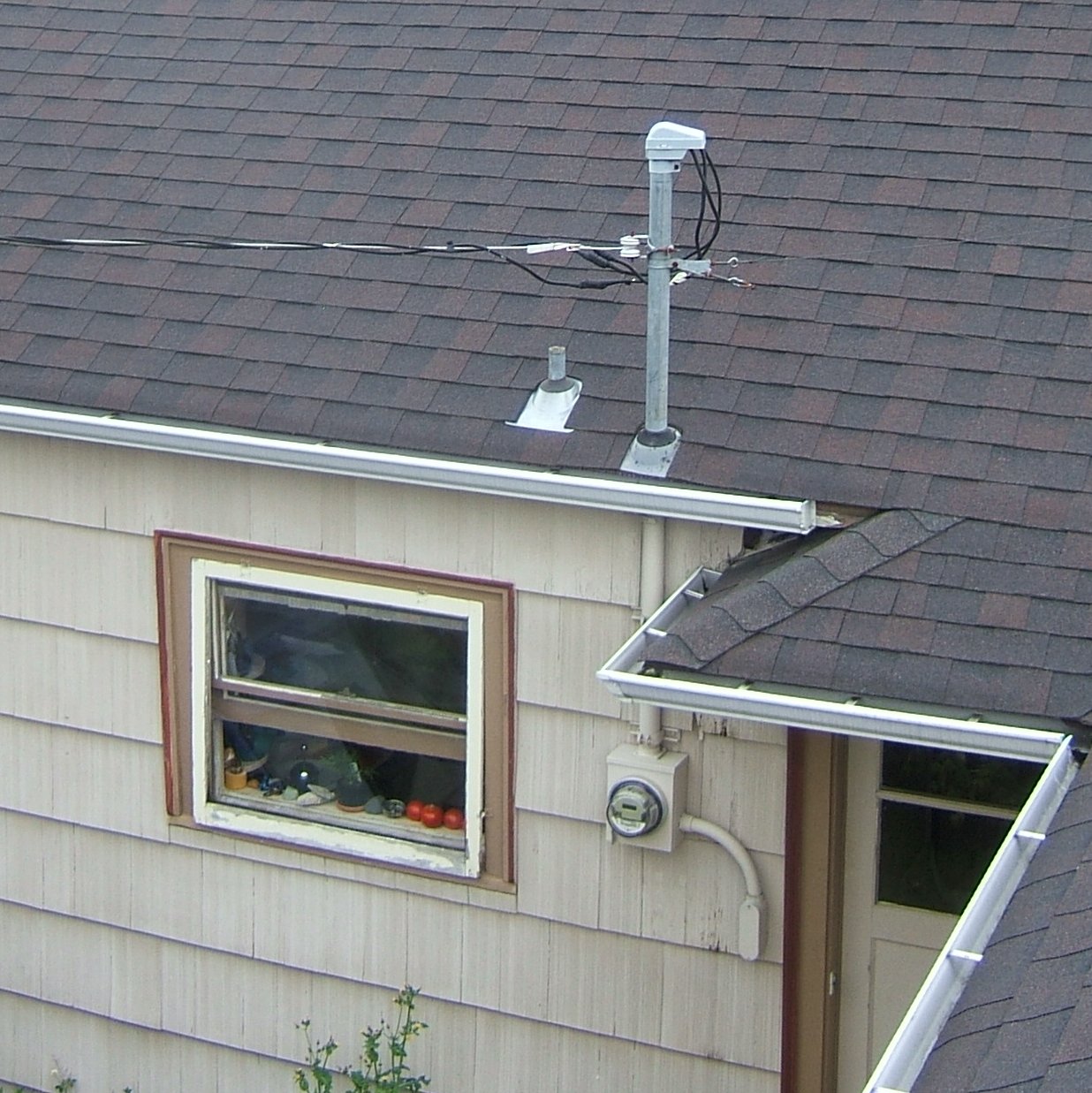
The entry detail is part of the attachment. Form a drip loop so water runs off the cable before it reaches the penetration. Leave enough slack for movement and termination without pulling the loop tight. On masonry, use a fastener and anchor that suit the wall; on metal, isolate dissimilar materials where the specification calls for it.
Cable support and the checks before sign-off
Cable clamps and clips solve different problems. A bolted clamp holds the cable against a surface with controlled pressure. A clip holds a light cable in a routed path. Neither one should deform the jacket, and neither one replaces a proper attachment at the building.
- Confirm cable type and jacket diameter against the fitting.
- Measure the pole circumference before selecting a band length.
- Check the bracket hole pattern against the attachment.
- Look for sharp edges, burrs, and damaged threads.
- Form a drip loop at the building entry.
- Confirm tension and sag against the project specification.
- Record the hardware and location for later inspection.
Walk the finished drop from the pole to the building. Look for cable contact with the pole, roof, gutter, or another service. Check that the band sits square, the bracket cannot rotate, and the hook has not split the siding. Small corrections at this stage cost less than a return visit.
Frequently asked questions
What counts as a drop attachment?
Any hardware that supports or secures the service drop at the pole, span, or building: bands, brackets, hooks, mast fittings, clamps, and clips. The term is broad because the drop changes structure several times.
Which end of the drop carries the tension?
Both ends participate, but the split depends on the design. A span clamp or dead-end may carry tension on the pole side, while the house hook holds the cable at the building. Confirm the load path with the engineer rather than assuming the hook is only a guide.
Can I use a cable clip for a house attachment?
A clip can guide a cable, but it may not have the holding force or fastener for a building attachment. Use a hook, screw eye, or bracket intended for the attachment, and confirm the fastener for the surface.
How do I match hardware to the cable?
Start with the cable type, outside diameter, and jacket material. Then check the fitting groove, clamp range, and contact area on the current datasheet. A fitting that closes on the jacket but crushes it is the wrong size.
Need help specifying a drop attachment?
Send the cable type, pole circumference, mounting surface, and attachment load. The Quan Pham team can confirm the bracket, band, and hook combination for the drop.
Browse the full Drop Attachments category or start from the Hardware Guides hub. For the cable hardware between the pole and the building, read Aerial Drop Hardware: Components and Installation Overview.



