



Earth Anchors Explained: Types, Applications, and How to Choose
Earth anchors hold guy wires, foundations, and utility structures in place by transferring load into the ground. The right anchor depends on soil, required capacity, access for installation equipment, and the rod and attachment hardware that connect to it. This guide explains the main anchor families and the checks that matter before you specify one.
Most anchor problems start before installation. A crew arrives with the wrong rod thread, a drive tool that does not match the hub, or an anchor sized for a soil condition that is not present. Sorting those details at the specification stage is cheaper than recovering an anchor that will not reach torque.
What an earth anchor does
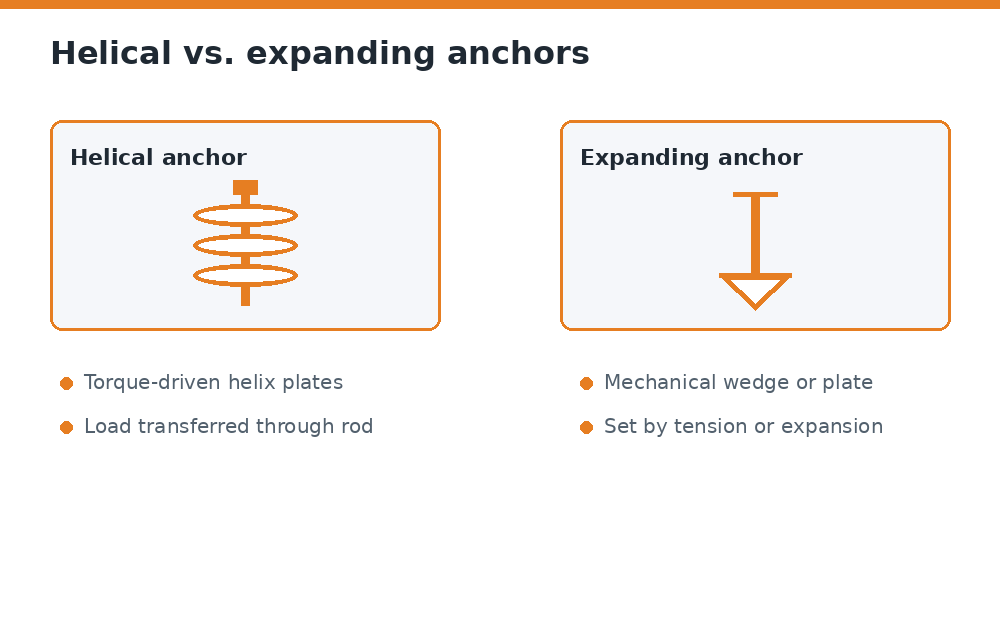
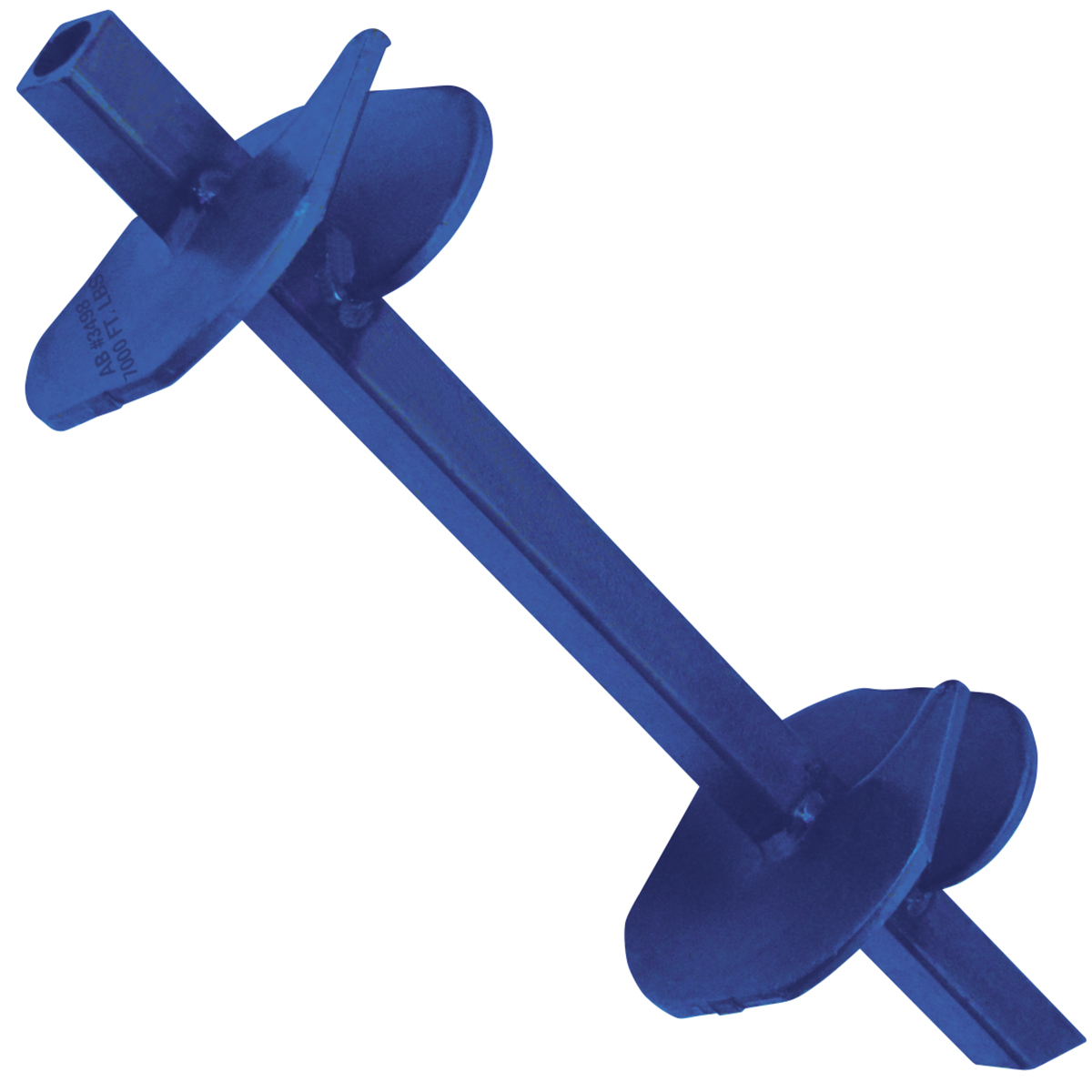
An earth anchor resists pullout by mobilizing soil or rock around a bearing surface. Helical anchors use one or more steel plates that are turned into the ground. Expanding anchors use a mechanical wedge, plate, or key that opens after the anchor is placed. Both transfer the load through a rod to a guy attachment or structural connection.
The anchor itself is only one part of the assembly. The rod, coupling, eye nut, guy adaptor, and installation tool all have to match. A high-capacity anchor with an undersized rod or a mismatched thread will not deliver the expected result.
The main anchor families
| Family | How it holds | Typical use | Installation note |
|---|---|---|---|
| Helical | Helix plates bear against soil | Guy anchors, foundations, utility structures | Requires torque drive equipment |
| Expanding | Wedge or plate opens in rock or soil | Rock, pole keys, limited-access sites | Needs a matched setting method |
| Power-driven | Driven rod or anchor body | Compacted soil, production guy sets | Drive tool and rod must match |
| No-wrench | Screw or forged anchor turned by hand or wrench | Light loads, tight access, small crews | Limited by soil and embedment depth |
Start with soil and load, not the catalogue page
Soil strength, moisture, and stratification decide how much bearing area you need. A helical anchor with a large helix in soft clay behaves differently from the same anchor in dense sand or weathered rock. Required capacity, safety factor, and the consequences of movement set the target.
Ask three questions before selecting an anchor:
- What is the required holding capacity, and what safety factor applies?
- What soil or rock conditions are expected at the embedment depth?
- What installation equipment can reach the location?
If the answers are uncertain, plan for a field verification method. Installation torque is a useful indicator for helical anchors, but it is not a substitute for a geotechnical review on critical structures.
Match the rod and attachment hardware
The rod carries the anchor load to the guy or structure. Diameter, length, thread, and coating all need to match the anchor and the attachment. A coupling nut joins rod sections; an eye nut or guy adaptor provides the connection point. Thread damage during installation is common when the drive tool does not align with the rod.
For galvanized assemblies, confirm that the coating system is consistent across the anchor, rod, coupling, and attachment. Mixing coating systems is not automatically wrong, but it needs a corrosion rationale. Buried connections deserve particular attention because inspection after installation is limited.
Installation method changes the anchor choice
Helical and power-driven anchors need equipment that can apply torque or drive force. No-wrench anchors trade capacity and depth for portability. On a production guy set, the installation method may decide the anchor family before the soil report does, because the crew and equipment are already fixed.
Check the drive tool, Kelly bar adapter, anchor wrench, and tamping tools against the anchor hub and rod. A tool that fits loosely can damage the hub or leave the anchor at the wrong depth. The installation sequence should include a torque or depth check and a visual inspection of the exposed rod and threads.
Corrosion and service life
Buried steel faces soil corrosion, moisture, and stray current. Hot-dip galvanizing is common for utility anchors because it provides a durable zinc coating and handles handling damage better than thin plated coatings. Stainless steel and protective wraps are options for severe environments, but they change cost and lead time.
Do not assume that a coating specified for the anchor is correct for the rod and coupling. The full assembly should use a consistent corrosion strategy, and any field-cut or damaged coating should be repaired with a compatible product.
Selection checklist
- Confirm required capacity and safety factor.
- Confirm soil or rock conditions at embedment depth.
- Match anchor hub, rod thread, coupling, and attachment.
- Verify the installation tool and available access.
- Specify a consistent coating system for the full assembly.
- Plan a torque, depth, or load verification step.
- Record the installed location, depth, and torque for future inspection.
Frequently asked questions
How do I choose between a helical and an expanding anchor?
Use a helical anchor when you can drive a helix into soil and verify installation torque. Use an expanding anchor when the ground or access conditions call for a mechanical lock, such as rock or a confined site. The final choice should follow the geotechnical and load requirements.
Can I use the same rod for every anchor type?
No. Rod diameter, thread, length, and coating must match the anchor hub and the attachment. Confirm the assembly as a system rather than ordering the anchor and rod separately.
Is installation torque the same as holding capacity?
Torque is an indicator of soil resistance during installation. It correlates with capacity in some conditions, but it is not a direct measurement of holding capacity. Critical installations should use the verification method specified by the engineer.
What coating should I use for a buried anchor?
Hot-dip galvanizing is a common starting point for utility work. Severe soil, coastal, or stray-current conditions may call for stainless steel or a protective wrap. Confirm the coating for the anchor, rod, coupling, and attachment together.
Need help matching an anchor to your project?
Send the required capacity, soil conditions, rod thread, and installation method. The Quan Pham team can confirm the anchor, rod, and attachment combination and quote the assembly.
Explore the full Earth Anchors category or browse the Hardware Guides hub.



