



Fasteners for Poleline and Utility Hardware: A Buyer’s Guide
Poleline fasteners hold overhead hardware together, so the bolt, nut, washer, and coating have to be specified as one system. Fasteners are the weak link when grade or coating is wrong. This guide maps the common families and the buying checks for utility work.
On an overhead line, a fastener that backs off or corrodes through can drop a conductor, loosen a guy, or leave a crossarm out of alignment. The part cost is small. The cost of a return trip with a bucket truck is not. Buying fasteners well means treating the bolt, nut, washer, and coating as one assembly, then checking that assembly against the load, the weather, and the tools the crew carries.
What poleline fasteners must do
Poleline fasteners clamp hardware to wood, steel, and concrete, connect guys and conductors, and hold assemblies that see wind, vibration, and thermal movement. They also have to survive years of rain, sun, pollution, and in some cases salt air. A fastener that meets a strength requirement but fails the coating requirement is still the wrong part.
The joint usually has three jobs: carry the load, keep the clamped parts from moving, and preserve the coating at contact points. A bolt that is strong enough but paired with a thin washer can deform the washer and lose clamp load. A galvanized bolt with a plated nut can create a corrosion pair that fails at the thread.
The four families of a bolted joint
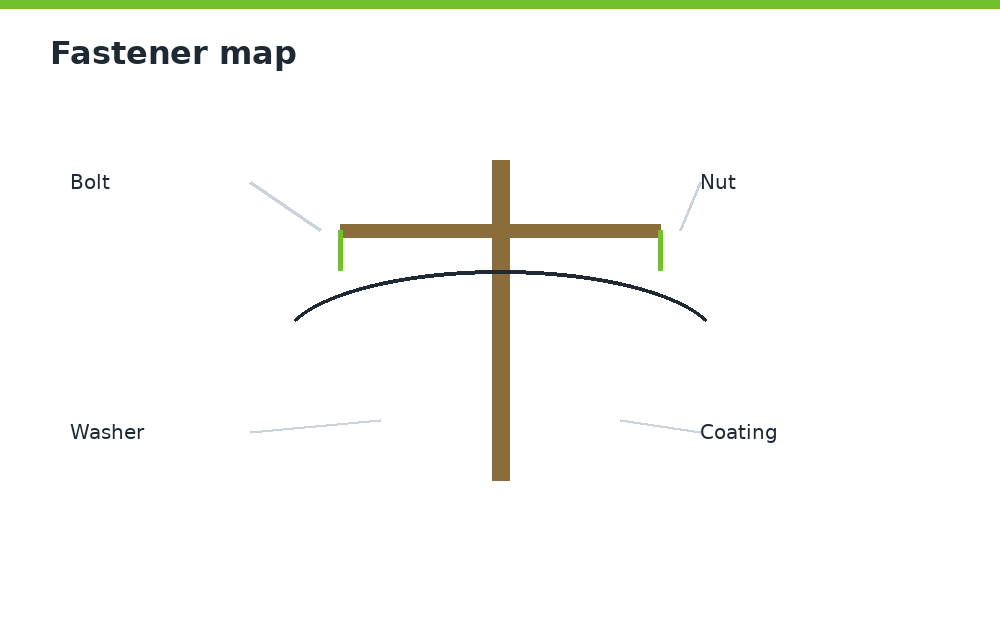
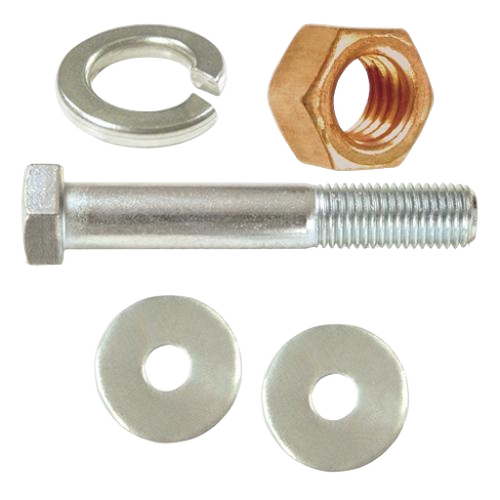
Most poleline connections use four part families. Treat them as a checklist, not a menu. The parts are selected together.
| Part | What it does | Buyer check |
|---|---|---|
| Bolt | Provides clamp load and carries shear or tension | Grade, diameter, length, thread, coating |
| Nut | Matches the bolt thread and grade | Thread fit, grade, coating, proof load |
| Washer | Spreads load and protects the bearing surface | Diameter, thickness, hardness, coating |
| Coating | Separates steel from moisture and chemicals | Service environment, thickness, repair method |
Match the fastener to the joint
Start with the load path. A guy attachment, a crossarm brace, and a pole band bolt see different forces. Some joints pull in tension. Others carry shear as the clamped parts try to slide. Vibration and thermal cycling add movement that a static catalog check will not show.
Grip length is the next check. It is the total thickness of the clamped material plus the washers. A bolt that is too short can leave threads inside the bearing area. A bolt that is too long leaves extra thread and less stretch, and it may interfere with nearby hardware.
Ask four questions before choosing a grade or a coating:
- What load does the joint carry, and is it tension, shear, or both?
- What is the grip length, including washers?
- What tools can reach the connection, and does the crew need hot-stick access?
- What environment will the fastener see over its service life?
The answers narrow the choice faster than a catalog page. They also expose mismatches early, while the fix is still a purchase order change.
Thread, grade, and coating fit
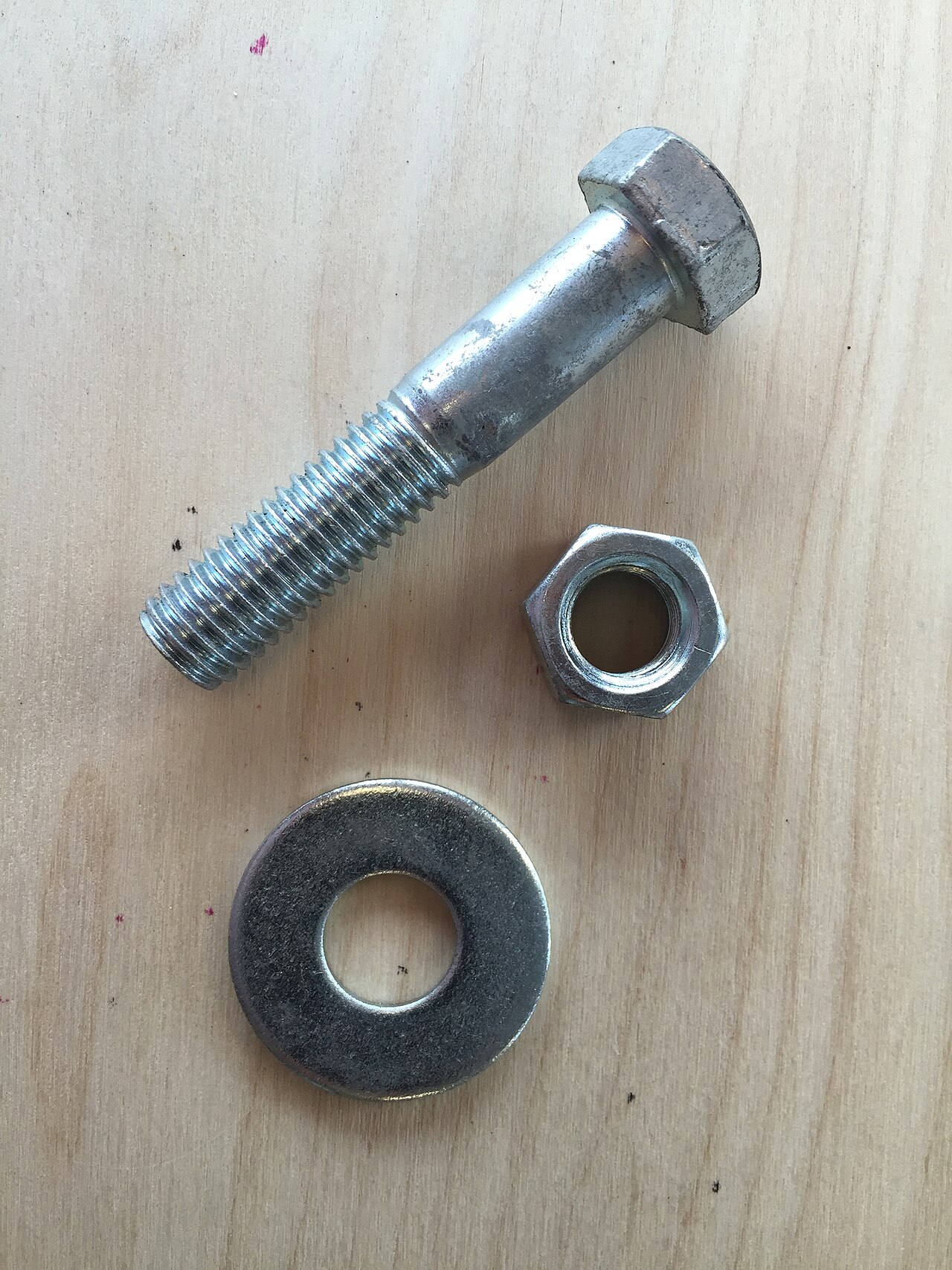
Thread series and diameter must match the nut and any tapped hardware. A bolt that threads in a few turns and then binds is the wrong fit. Stop and identify the mismatch. Forcing the nut damages the coating and the thread, and the damage is difficult to see after assembly.
Grade pairing matters as much as bolt strength. A nut should be rated for the bolt and the connection. A washer needs enough hardness and thickness to spread the load without deforming. A high-strength bolt with a soft washer can lose clamp load even when the wrench reads the target.
Coatings also have to match across the assembly. Hot-dip galvanized bolts commonly use overtapped nuts that clear the zinc. A standard nut may start and then bind. Plated and stainless parts follow different rules. A mixed coating system can work, but it needs a reason and a review of the contact points.
Procurement and receiving checks
Most field errors are decided at the order desk. A generic description such as “galvanized bolt” leaves grade, thread, and length open to interpretation. Write the full callout, including coating, and ask the supplier to confirm it on the acknowledgment.
- Order by grade, diameter, length, thread, and coating.
- Require head markings and package labels that match the purchase order.
- Confirm that nuts and washers arrive with a compatible coating system.
- Inspect threads for damage, debris, and coating buildup before the crew leaves the yard.
- Keep stainless and galvanized parts separated in storage.
- Record the lot and supplier for critical assemblies.
Receiving is the cheapest inspection point. A missing washer or a mismatched nut found in the yard costs minutes. The same problem found at height costs a climb, a delay, and sometimes a second crew.
Frequently asked questions
What is the most common fastener mistake in utility work?
Mismatched grade or coating. A plated nut on a galvanized bolt, or a low-grade bolt in a loaded joint, can assemble and still fail inspection or service. The error is easy to miss because the parts look compatible.
Should I standardize on one bolt grade?
Standardize where the loads and hardware allow, but confirm each connection. One grade can be convenient and still be wrong for a joint that needs a different strength or coating. Consolidate sizes where practical, then let the joint and environment decide the grade.
How do I verify a fastener before installation?
Check the head marking, thread fit by hand, coating coverage, and package label. Confirm that the nut and washer match the bolt. If a thread binds, stop and identify the mismatch instead of forcing it.
Can I mix stainless and galvanized hardware?
Mixing can be acceptable in some dry locations, but it needs review where moisture or salt is present. The contact can drive galvanic corrosion, and the joint is difficult to inspect after assembly. Ask the engineer before substituting.
Need help specifying poleline fasteners?
Send the joint drawing, required grade, thread, coating, and expected environment. The Quan Pham team can confirm the bolt, nut, washer, and kit combination and quote the assembly.
Explore the full Fasteners category or browse the Hardware Guides hub. For the poleline hardware these fasteners join, read Poleline Hardware: The Complete Buyer's Guide.


