




Grounding Hardware: A Practical Guide for Utilities and Telecom
Grounding hardware connects equipment, conductors, and earth. This guide maps the parts and the selection checks that keep a grounding system effective. A utility or telecom grounding system is an assembly, and every connection has to carry its share of the fault current and face the same soil and weather as the rod it serves.
Grounding problems rarely announce themselves. A clamp that loosens after freeze-thaw cycles, a lug landed on painted steel, or a rod driven short of the moisture layer can sit unnoticed until a fault or an inspection finds it. The hardware is simple, which makes the details easy to skip.
What grounding hardware has to do
Grounding gives fault current and surge energy a controlled path to earth. It also holds exposed metal near earth potential, so a person who touches a cabinet, meter box, or telecom enclosure is not part of the circuit. The hardware has to do that for decades, often with no more attention than an occasional visual check.
Three jobs matter on every installation. The connection must stay mechanically tight. The metal-to-metal contact must stay electrically continuous. The assembly must resist corrosion in soil and at the transition from buried to exposed service. A part that does one job well and another poorly will pull the whole system down.
The parts of a grounding system
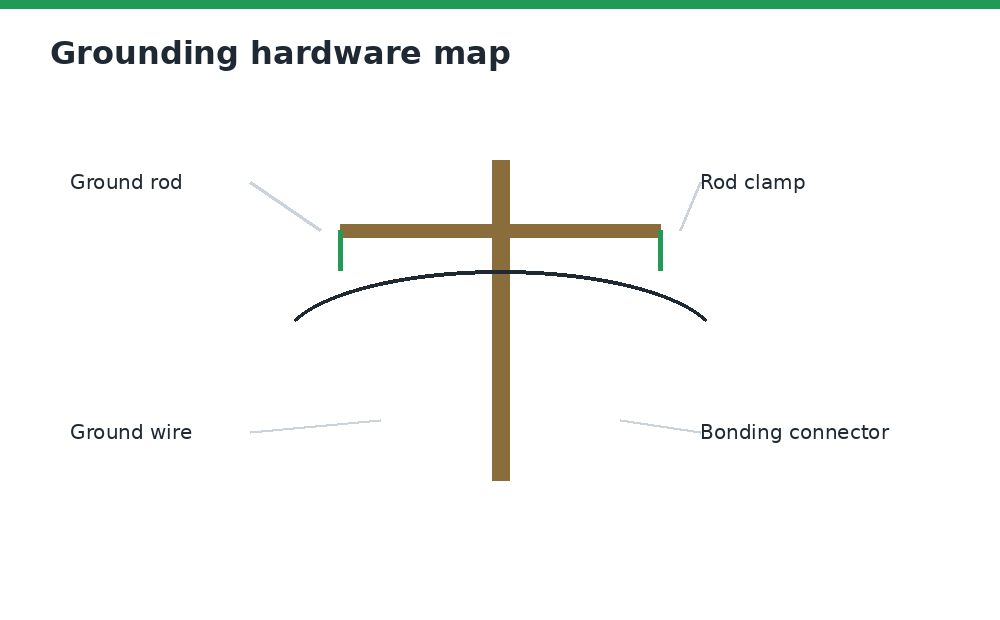
Most systems use the same handful of parts in different combinations. The ground rod reaches stable soil. The rod clamp ties the conductor to the rod. The ground wire carries current to the service or equipment. A bonding connector joins the conductor to a cabinet, tray, pipe, or structural member.
| Part | Job | Field check |
|---|---|---|
| Ground rod | Reaches stable, moist soil | Material, diameter, driven depth |
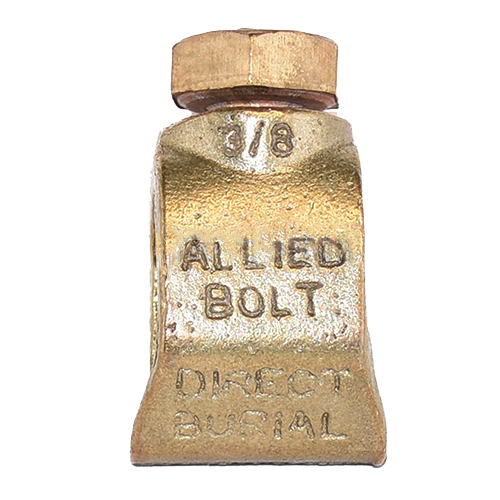
| Rod clamp | Connects conductor to rod | Fit on rod and conductor, tightness |
| Ground wire | Carries fault and surge current | Size, routing, protection from damage |
| Bonding connector | Joins conductor to equipment or metalwork | Clean contact, material pairing |
Selection checks that prevent callbacks
Start with the physical fit, then work outward to the environment. A clamp that fits one rod size will not fit another, and a connector rated for a stranded conductor may not close properly on a solid wire. Catalog descriptions are a starting point; the current datasheet and the project engineer settle the final requirement.
- Confirm the actual rod diameter with a caliper or the rod marking before ordering clamps.
- Match the conductor range to the wire you will install, including the insulation strip length.
- Decide whether the connection is buried, exposed, or transitional, because that changes the material choice.
- Check the material pairing between rod, clamp, conductor, and the metal being bonded.
- Leave room to inspect and retorque the connection after installation.
Local code and the project engineer govern the final requirements for conductor size, burial depth, and connection method. Where a value affects the design, confirm it on the current datasheet or ask the engineer rather than working from memory.
Installation details that decide performance
Clean contact surfaces before assembly. Paint, mill scale, dirt, and oxidation add resistance at the exact point where the circuit needs a solid joint. Wire brush the rod and the conductor landing, then assemble promptly so the cleaned metal does not collect moisture.
Tighten to the manufacturer's published torque with a calibrated tool. A clamp that feels tight by hand can still be loose enough to move under fault current. Recheck the connection after the conductor has been pulled and trained into its final route, since pulling can shift the clamp on the rod.
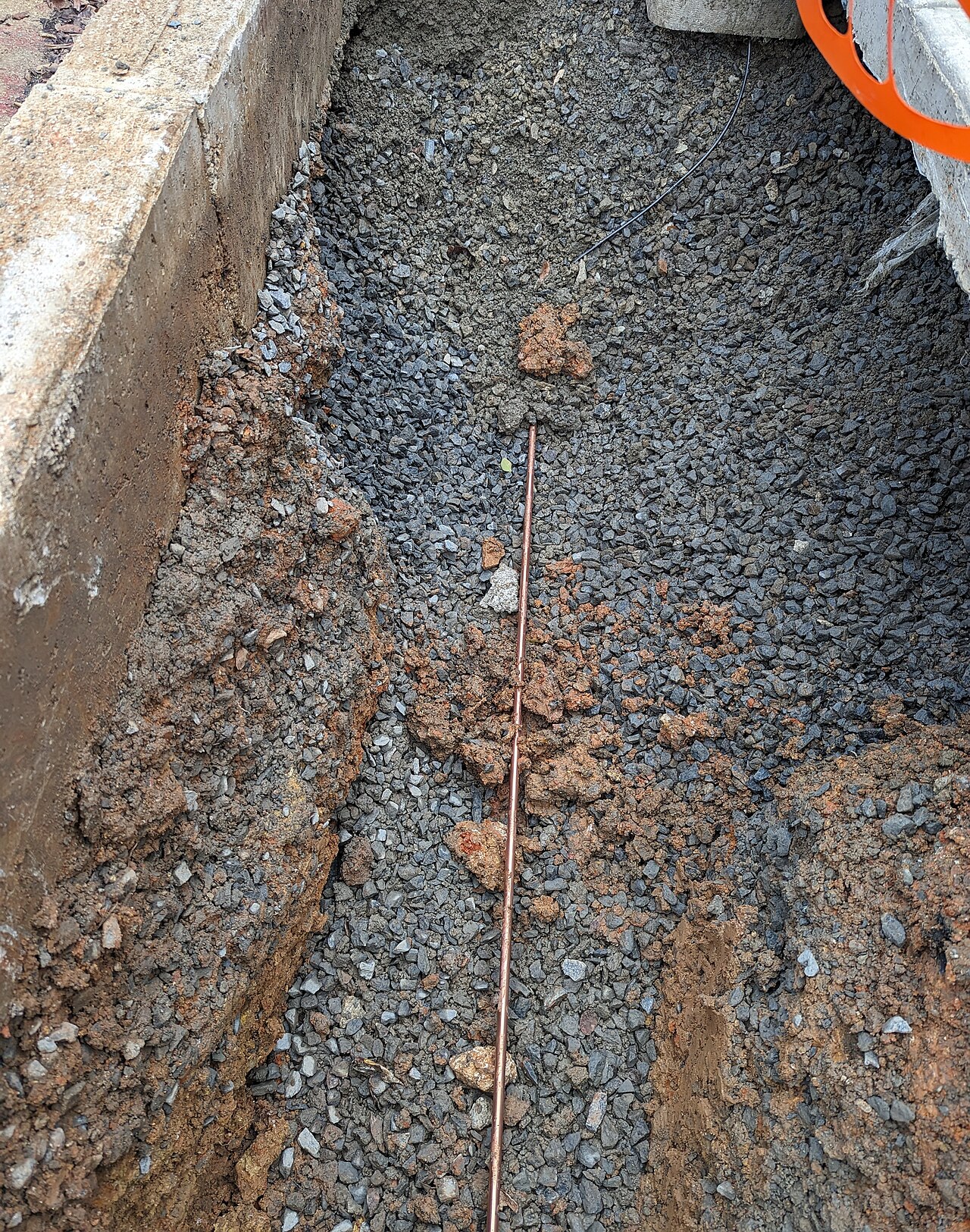
Protect the conductor where it leaves the soil. A sharp bend, a tight cable tie against a rock, or a jacket rubbed by equipment will fail before the rod does. Support the wire along its route and keep the bend radius within the conductor manufacturer's recommendation.
Inspection and recordkeeping
An inspection should follow the same path as the current. Start at the equipment bond, move along the conductor, and finish at the rod and clamp. Look for loose hardware, white or green corrosion product, crushed strands, and jacket damage. A clamp that has shifted on the rod needs attention even when it still feels snug.
Record the rod location, clamp type, conductor size, and inspection date. A ground resistance test is a snapshot of the electrode and the soil at that moment, so a baseline reading helps the next person judge whether a change is real. Test methods and acceptance values belong to the project engineer and the local authority.
Frequently asked questions
What hardware does a basic grounding system need?
A rod, a rod clamp, a grounding conductor, and a connector at the equipment or service. The exact assembly depends on the structure, the fault current, and the local code. Confirm the conductor size and connection method with the project engineer.
Does a ground rod clamp have to match the rod exactly?
Yes. The clamp has to close on the actual rod diameter and hold the conductor range without bottoming out. Check the rod with a caliper and confirm the clamp range on the current datasheet. Forcing a clamp onto the wrong rod damages the threads and weakens the connection.
Can bronze and galvanized hardware be used together?
They can be paired in some locations, but the combination needs a corrosion rationale. Dissimilar metals in a wet or chloride-rich soil can drive galvanic attack. Ask the engineer and consider a bimetallic connector or a protective coating at the joint.
How often should grounding hardware be inspected?
Follow the owner's inspection schedule and the local requirements. Add a check after a fault, a lightning event, or nearby construction. Connections that are buried or hidden deserve a documented baseline so later changes can be compared.
Need help specifying a grounding assembly?
Send the rod type, conductor size, connection location, and service environment. The Quan Pham team can confirm the clamps, lugs, and bonding parts that fit the assembly and quote the package.
Explore the full Grounding Hardware category or browse the Hardware Guides hub. For the pole hardware around the grounding connection, read Poleline Hardware: The Complete Buyer's Guide.


