


December 2022
What is a cable tray?
What is a cable tray?


Cable tray includes:
- T-Troughs also known as T-Cuts: Used to divide the cable tray system into 3 directions, the 3 directions of T-Cuts can be different or equal. The widths of the three T sides are conventionally read clockwise. For example: QP-T(100x200x300)x100-S1.2 is a T-Cut with 3 sides with input widths of 100x200x300mm respectively, cable tray height is 100, powder coated on 1.2mm thick material.< /li>
- X-shaped cable tray also known as X-knout: Used to divide the cable tray system into 4 directions, the 4 directions of the X-cend can be equal or different, case 4 Equal sides will be shortened and the widths of the 4 edges of the X-claw are also conventionally read clockwise.
- Cable tray connection: There are two common types of cable tray connection: + Connecting: A connecting piece shaped like a cable tray is placed in the cable tray and fixed by screws on both sides of the cable tray. For cable trays with a width of 500mm or less, it is recommended to use the connecting type, paying attention to cover the gap between the two cable trays. + Detachable connection: Using 2 connecting rods on both sides of the cable tray makes installation faster and more convenient.
- Horizontal Curve, also known as L-Cut (90° Clutch). Used to guide the cable tray system left or right. The two sides of the Horizontal Contour may not be equal.
- Shrink: Shrink is a cable tray accessory to guide the cable tray system going straight up,
- Downward: In contrast to Upward, Downwards guide the cable tray system downwards. Shrink Up and Shrink are not symmetrical, you avoid confusion when ordering.
- Straight cable tray.

When choosing cable trays, please note:
+ Gray: Commonly used for power cables
+ Orange or blue: Usually used for signal cables, control cable
+ Cable trays are often used outdoors, in harsh environments or for unshielded wires such as XLPE.
Common size of cable tray:
- Common height of cable tray: 50mm, 75mm, 100mm,...
- Common width of cable tray: 100mm, 200mm, ..., 1000mm
- Thickness of cable tray: 0.8mm-2.5mm
How to choose the right cable tray thickness for the size:
- For cable trays with a width of 300mm, it is recommended to choose a minimum thickness of 1.5mm.
- For cable tray with width less than 200m, please choose thickness < 1.5mm.
- For hot-dip galvanized cable tray, please choose a minimum thickness of 1.5mm for small cable tray and 2mm for large cable tray.
When you want to buy cable tray ladder, please contact:
Ms Kim Oanh: 0903 790 986
Email: sale@quanpham.vnGuidelines for classification and selection of cable tray ladders
How to choose cable tray ladder
How to choose a cable tray ladder: to choose the right cable tray and ladder, you can refer to how to choose a cable tray ladder as follows: Use cable tray when is used for thin shielded wires, or in outdoor environments. You should also choose the color that matches the cable type: Orange cable trays are usually used for control cables. Gray cable trays are usually used for power cables. Use cable ladder when is used for sheathed wires such as XLPE or in tunnels, server rooms, where there is air conditioning good environmental conditions. Based on the characteristics of the wire and the installation location, you can choose cable tray ladder matches the following suggestions:Features of cable ladder, cable tray and unpunched cable tray
3 Benefits of using cable tray ladders
Benefits of using cable tray ladder
3 Benefits of using cable tray ladders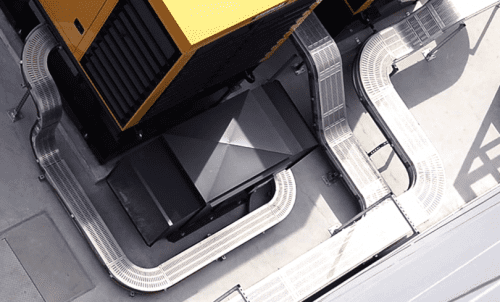
1. Economic benefits:
Material cost:
There have been too many actual works showing that the initial cost to install the system cable tray ladder complete (including cost of wiring, materials, workers, installation) is significantly lower than the conduit system by about 50-60%. (more…)Supply high quality cable tray accessories
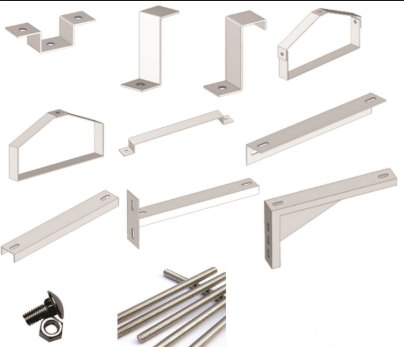
What is hot dipped galvanized steel?